
Some projects begin with the question, "What should we make?" This game started a little differently.
There was no code yet, and no polished design document. It began with small characters that my child had folded from paper, drawn faces on, and cut out by hand.
At first, I thought they were simply paper dolls. But as I listened to my child explain them, I realized that I was not looking at four paper dolls. I was looking at the main characters of a game that did not yet exist on a screen.
Four friends born on paper
Galsaengi, Block, Good Zombie, and Guardian Fairy.
My child chose every name. Their hand-drawn eyes and mouths were slightly different, and the folds in the paper were still visible. They were nothing like perfectly finished game character illustrations. That was exactly what I liked about them.
If I turned them into immaculate, professional-looking characters, I felt that something my child had made might disappear.
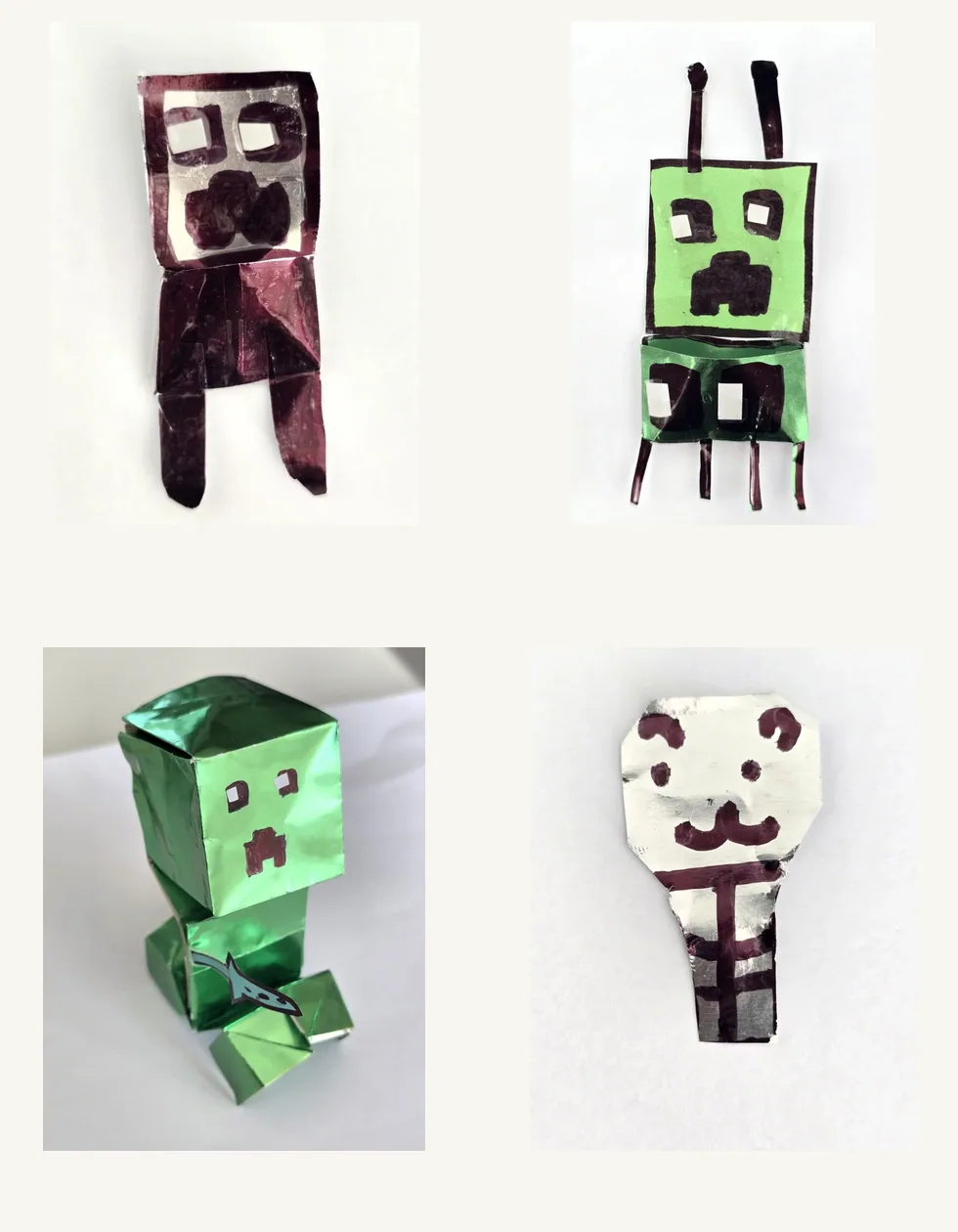
My child had already decided who would appear first, which character would be bigger, and what each one would do. Making the images merely resemble the paper shapes would not be enough.
A friend who stays, even when the hero changes
The game begins with Galsaengi. By breaking rocks and collecting crystals, the hero transforms into Block, and then into Good Zombie. Every three crystals bring the next transformation.
But another friend is part of the adventure from the beginning: Guardian Fairy.
Guardian Fairy is not a character unlocked at the end. Whether the main character is Galsaengi or Block, the tiny fairy flies nearby and watches over them.
I loved that detail. This world contained not only a hero who grows stronger, but also a friend who stays beside that hero from the very beginning.
"What if we made these exact characters move?"
We did not begin with a grand ambition to build a complete game. Watching the characters my child had drawn walk around on a screen would have been fun enough.
In the past, making a game might have seemed like a task with too many things to learn before getting started. Now, however, it is possible to describe an idea to AI, see a working screen, and refine it little by little.
I made one decision early: we would not replace the paper characters with generic game artwork. Their uneven eyes and hand-colored expressions were part of the game.
When the first green field appeared on the screen, Galsaengi stood among rocks and trees. The little Guardian Fairy hovered nearby.
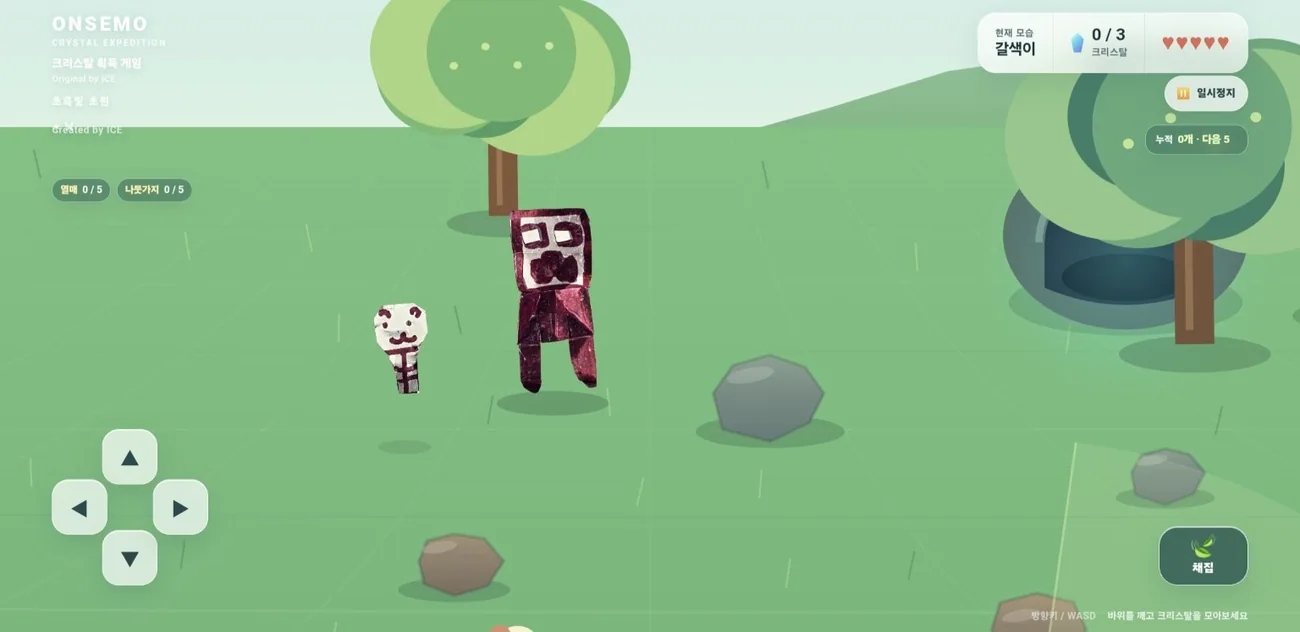
The paper that had been lying still on the desk had become a moving character on the screen.
It felt both remarkable and a little funny. To someone else, it might have looked like the opening screen of a simple web game. To me, it was the special moment when pieces of paper I had just held in my hands began to move.
But my child already knew what would happen next
I thought getting the characters to move was quite an achievement.
For my child, though, the story was only beginning. Breaking rocks would reveal items. Dangerous creatures would be waiting inside caves. Collecting crystals would change the hero's form. There would be flying in the sky and swimming under the sea.
I had imagined a game in which a few paper characters moved. My child had already imagined the entire world in which those characters would live.
My child began writing that story by hand on A4 paper. The page quickly filled with caves, rocks, crystals, and new adventures. The story continued beyond what a single sheet could hold.
If seeing paper characters move was the beginning, the next step was to create the adventure those little friends would set out on.